Understanding the U.S. Elections: A Multi-Perspective Analysis
ACCS blog
26 November 2024
Democracy and the Shadow of Violence
Dr. Abbey Steele, Associate Professor of Political Science, addressed the coexistence of violence with democratic processes in the United States. She highlighted the presence of not just symbolic, but physical incidents of violence during the elections, including threats at polling stations and plans to incite riots if Trump lost.
Steele noted that Trump's immigration policies, particularly mass deportations, rely on institutional violence, involving detentions under harsh conditions. She also warned that Trump's incumbency could heighten the risk of violence during future elections, particularly when his tenure is challenged.
The Role of Political Rhetoric
Dr. Alessandro Nai, Associate Professor of Political Communication, analyzed the rhetoric of the two major political camps. Trump’s “muscular rhetoric,” characterized by personal attacks and ridicule, contrasted with the Democrats’ traditional focus on policies. However, Kamala Harris's adoption of similar tactics disrupted this asymmetry, sparking strong reactions but potentially weakening the Democratic campaign's perceived seriousness.
Nai argued that symbolic violence in rhetoric—manifested in racist, misogynistic, and inflammatory language—can normalize real acts of violence. Such rhetoric contributes to the polarization and emotional intensity of the electoral landscape.
Polarization and Voting Behaviors
Gijs Schumacher, Associate Professor of Political Science, discussed the heightened polarization in the U.S., exacerbated by its bipartisan system. He noted that American elections are heavily turnout-dependent, yet this year saw a drop in participation, reflecting widespread voter disillusionment.
Despite this, Trump’s success seems linked to the prevalence of negative campaigning, even though research suggests voters prefer positivity. Schumaker proposed that the widespread exposure to negative discourse might amplify its influence on public perceptions and outcomes.
The Threat of Misinformation
Dr. Jaron Harambam, Assistant Professor of Media, Truth Politics, and Digitalization, explored the role of technology and disinformation. AI-generated content, such as a fabricated message from Joe Biden urging citizens not to vote, was used to sow confusion.
Harambam’s research revealed that conspiracy theories thrive across the political spectrum, with surprisingly significant traction among left-leaning groups. This underscores how moral panic about disinformation can inadvertently fuel conspiratorial thinking. Ultimately, he argued, ideological convictions, not facts, drive voting behavior, as evidenced by Trump's growing support among women and people of color.
Money and Influence in Campaigns
Dr. Trevor Incerti, Assistant Professor of Political Economy, examined the financial dimensions of U.S. elections. Despite public support for spending limits, campaign financing remains largely unrestricted.
The rise in small donations since 2016 reflects grassroots engagement, but corporate contributions still dominate, driven by strategic interests rather than ideological alignment. Incerti emphasized the inconsistency of this election’s financial patterns, noting that reactive and defensive donations played a significant role.
Implications for the Future of Democracy
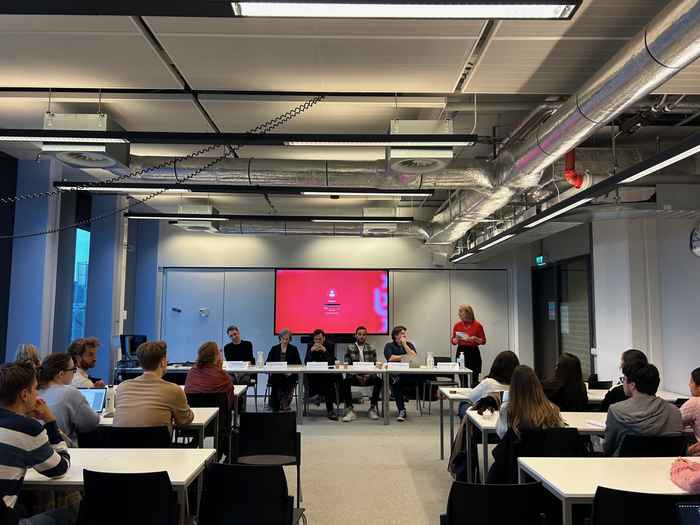
The roundtable underscored the complex interplay of violence, rhetoric, polarization, misinformation, and financial power in shaping U.S. elections. As these dynamics evolve, their impact on democratic processes and institutions will require ongoing scrutiny and critical engagement.
This conversation is a reminder that democracy, far from being static, is an ever-shifting terrain where competing forces redefine its contours.