Change through Continuity: How Leaders Reshape Social Identity in a Jihadi Group
ACCS lunch talk by Orwa Ajjoub
- Date
- 18 June 2026
- Time
- 12:00 -13:30
- Room
- B9.22
Drawing on the concept of identity entrepreneurship, Ajjoub analyses 21 statements, speeches and interviews by HTS leaders and senior ideologues between 2013 and 2017. He shows how they repeatedly defined group identity and drew in-group/out-group boundaries in ways that legitimised organisational ruptures, ideological repositioning, shifting alliances and violent conflict with different actors. By treating identity entrepreneurship as an ongoing, processual practice rather than a single moment of change, the paper offers a new lens for understanding leadership, legitimacy and continuity in jihadi movements.
Full abstract
Change through Continuity: Processual Identity Entrepreneurship in Hayat Tahrir al-Sham, 2013 to 2017
Scholarship has examined the role of social identities in shaping jihadi groups’ trajectories, enemy construction, and the legitimation of violence. Nevertheless, less attention has been paid to how leaders actively craft those identities over time. Focusing on Hayat Tahrir al-Sham, a Sunni jihadi group that emerged from the Islamic State in Iraq in 2012, later aligned with al-Qaeda Central in 2013, and then broke with it in 2016, this article examines how the group’s leadership engaged in identity work to navigate organizational ruptures, ideological repositioning, violent conflict with different actors, and shifting alliances between 2013 and 2017. Drawing on the concept of identity entrepreneurship, the article analyzes 21 statements, speeches, and interviews issued by HTS leaders and senior ideologues to examine how they repeatedly defined group identity and constructed in-group and out-group boundaries in ways that helped legitimate change and mobilize collective action. In doing so, the article extends identity entrepreneurship beyond single-phase analysis by using it as a processual lens for understanding how leaders define and manage social identity over time.
About Orwa Ajjoub
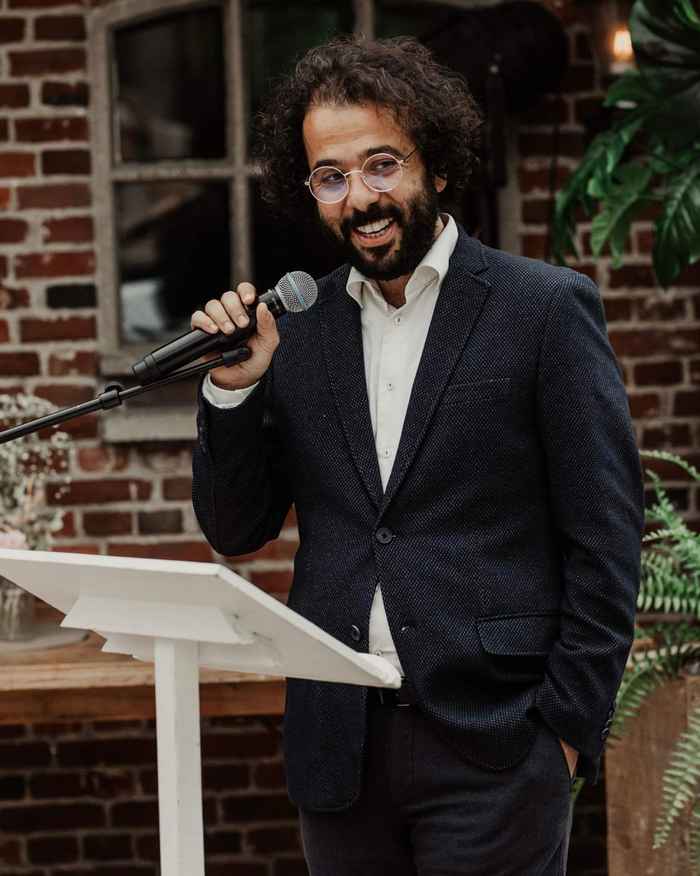
Orwa Ajjoub began his PhD studies in Global Politics at the Department of Global Political Studies in September 2023. Building on a Master’s degree in Middle Eastern Studies from Lund University, his PhD project examines the role of radical religious rhetoric in mobilising support and legitimising both inter-group and intra-group violence—even when the actors involved broadly adhere to the same religion and share similar ideological beliefs.
Alongside his PhD research, he works as a research analyst, primarily focusing on jihadism and the Syrian conflict. He has authored policy papers on radicalisation in Lebanon and Syria, particularly in al-Hol camp. His work has been published by various outlets and think tanks, including Syria Deeply, the Middle East Institute, the Atlantic Council, and Jihadica.